Event Recap: "The Changing Landscape of Cancer: Prevention, Emerging Therapies, Survivorship, and Healthy Aging"

The Stein Institute for Research on Aging recently welcomed a packed audience at Osher Lifelong Learning on UC San Diego Campus for the 4th annual LEE Tuh-Fuh & Ruby LEE Wang Zu-Ming Endowed Education Fund for Healthy Aging Lecture exploring cancer research, treatment, and survivorship.
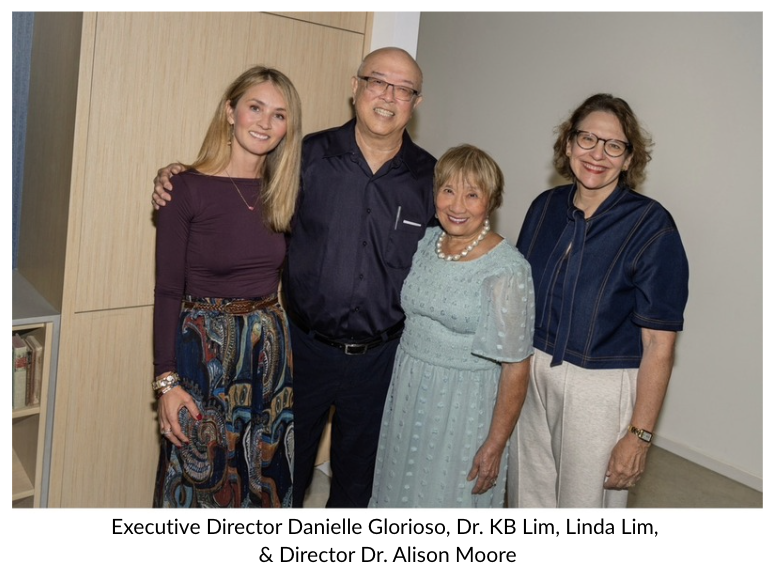
Established more than four years ago through a generous endowment from Dr. KB and Linda Lee Lim, the lecture series reflects their commitment to providing free, community-based education to older adults. This year’s program brought together leading experts from UC San Diego’s Moores Cancer Center and Stein Institute for Research on Aging Executive Director Danielle Glorioso, who shared her personal journey through advanced-stage colorectal cancer.
 Danielle opened the event by reflecting on how the program came to be. One year earlier, as she helped organize and lead the endowed lecture series, she was undergoing daily radiation treatment for advanced-stage colorectal cancer and struggling with severe side effects. About a month later, during a lunch with the Lim family, Danielle shared her diagnosis with them. She had intentionally waited until after the event to tell them, not wanting to cause concern or risk the program being canceled. During that lunch, Linda Lim suggested dedicating the following year’s program to cancer and inviting Danielle to share her personal story.
The idea gave Danielle something meaningful to hold on to during some of her hardest days: the possibility that one day she might share her experience and make a difference for others.
 Stein Institute Director Alison Moore followed with remarks on the importance of community events and the Institute’s commitment to education on topics important to healthy aging. She then introduced Dr. Samir Gupta, whose presentation, “The Changing Face of Colorectal Cancer: A Generational Challenge,” explored trends in colorectal cancer and opportunities to improve screening and prevention.
 Dr. Gupta also highlighted research published in Nature in 2025 that found signs of exposure to colibactin, a toxin produced by certain strains of E. coli, were more common in younger adults with colorectal cancer. This research may offer important clues about the rising rates of colorectal cancer in younger people.
 Danielle then shared her journey from diagnosis and treatment to becoming cancer-free in her presentation, “When Resilience Becomes Personal: From Studying Resilience to Living It.” Drawing on her years of work studying resilience at the Stein Institute, she reflected on the practices that helped her navigate some of the most difficult days, including gratitude, connection to others, and engaging in activities aligned with her values. She spoke about the importance of staying connected to the things that made her feel like herself, even when cancer changed nearly every aspect of daily life.
Danielle reflected on how staying connected to who she was meant adapting to her new limitations, making adjustments, and finding ways to continue doing the things she loved, even when it was difficult. Whether spending time with friends or attending a concert during chemotherapy, these experiences required flexibility and often looked different than they would have before cancer. But they also gave her moments when she could forget, even briefly, that she was a cancer patient and simply enjoy being herself. Those moments of joy and connection helped sustain her through the hardest days.
 The final presentation, “Cancer Treatment: Path Forward,” was delivered by Dr. El Rayes, Deputy Director of Moores Cancer Center. He highlighted the important cancer research underway at Moores and discussed clinical trials that may offer opportunities for community members to access promising new approaches to treatment.
 The event concluded with a question-and-answer session, giving attendees the opportunity to engage directly with the speakers and explore questions about cancer research, treatment, and survivorship.
 The Stein Institute extends its sincere thanks to the Osher Lifelong Learning Institute for co-hosting the event, Dr. Gupta and Dr. El Rayes for sharing their expertise, and the Lim family for their generous support and commitment to advancing research and community education. Their generosity helps bring important scientific knowledge to the community and makes a meaningful difference in the lives of older adults. We are also grateful to everyone who joined us for this special day of learning, connection, and hope.
Disappointed you missed the event, or want to watch it again? The program will be available on UC-TV in the coming months. We’ll share the link as soon as it’s available!